Freshwater fishing in Canada covers an enormous range of conditions: cold, deep shield lakes in northern Ontario, shallow weedy bays in the Maritimes, fast rivers in British Columbia, and ice-covered lakes through a six-month winter in much of the Prairies. The gear that works well in one context performs poorly in another. Most anglers who fish regularly end up with multiple rod-and-reel setups optimised for different species and water types.
The following covers the core equipment categories and how different choices affect performance for the main Canadian freshwater species.
Rod action and power
Rod action describes where the rod bends under load. A fast-action rod bends primarily near the tip, providing quicker hook sets and better sensitivity for detecting light bites. A slow-action rod bends through more of the blank, loading deeply and helping cast lighter lures farther. Medium and medium-fast actions fall between and serve as versatile choices for species like walleye and bass where a single rod handles multiple techniques.
Rod power — sometimes labelled light, medium, medium-heavy, and heavy — describes how much force is required to bend the rod. This determines the appropriate line weight and lure range:
- Light to ultralight: Perch, crappie, and trout in streams — 2–8 lb line, small jigs and spinners
- Medium: Walleye, bass, and smaller pike — 8–14 lb line, jigs, crankbaits, and soft plastics
- Medium-heavy to heavy: Large pike, muskellunge, and lake trout — 15–30 lb braid or fluorocarbon, large spoons and swimbaits
Spinning vs. baitcasting reels
Spinning reels are more forgiving for beginners and handle lighter lines and smaller lures more reliably than baitcasting reels. The open-face spool design makes casting in windy conditions easier and reduces the chance of line tangles. For most walleye and perch fishing, a medium spinning reel (2500–3000 size) on a medium-action rod covers the majority of situations.
Baitcasting reels offer more precise lure placement and handle heavier lines with less twist. They are preferred for casting heavier jigs and swimbaits for pike and muskellunge, and for jigging deep structure for lake trout. The learning curve is steeper — backlashes are common during the initial adjustment period — but for anglers fishing heavy cover or targeting large fish, the control advantage is significant.
Line selection
Three main line types are used in Canadian freshwater fishing:
- Monofilament — stretches under load (helpful for treble-hook lures), floats, inexpensive. Diameter is thicker per pound-test compared to other options. Deteriorates with UV exposure over time.
- Fluorocarbon — nearly invisible underwater, low stretch, sinks. Well suited for walleye leaders and clear-water applications where line visibility matters. Stiffer than mono, which affects casting of very light lures.
- Braided line — very thin per pound-test, zero stretch, high sensitivity. Preferred for jigging deep water and fishing heavy weeds. Requires a fluorocarbon leader when fish are line-shy. Visible to fish in clear shallow water.
Cold water affects all line types. Fluorocarbon becomes slightly stiffer below 5°C. Monofilament absorbs water and softens over extended sessions. Ice fishers using braided line in very cold conditions sometimes encounter issues with ice forming in the guides.
Jigs and terminal tackle for Canadian species
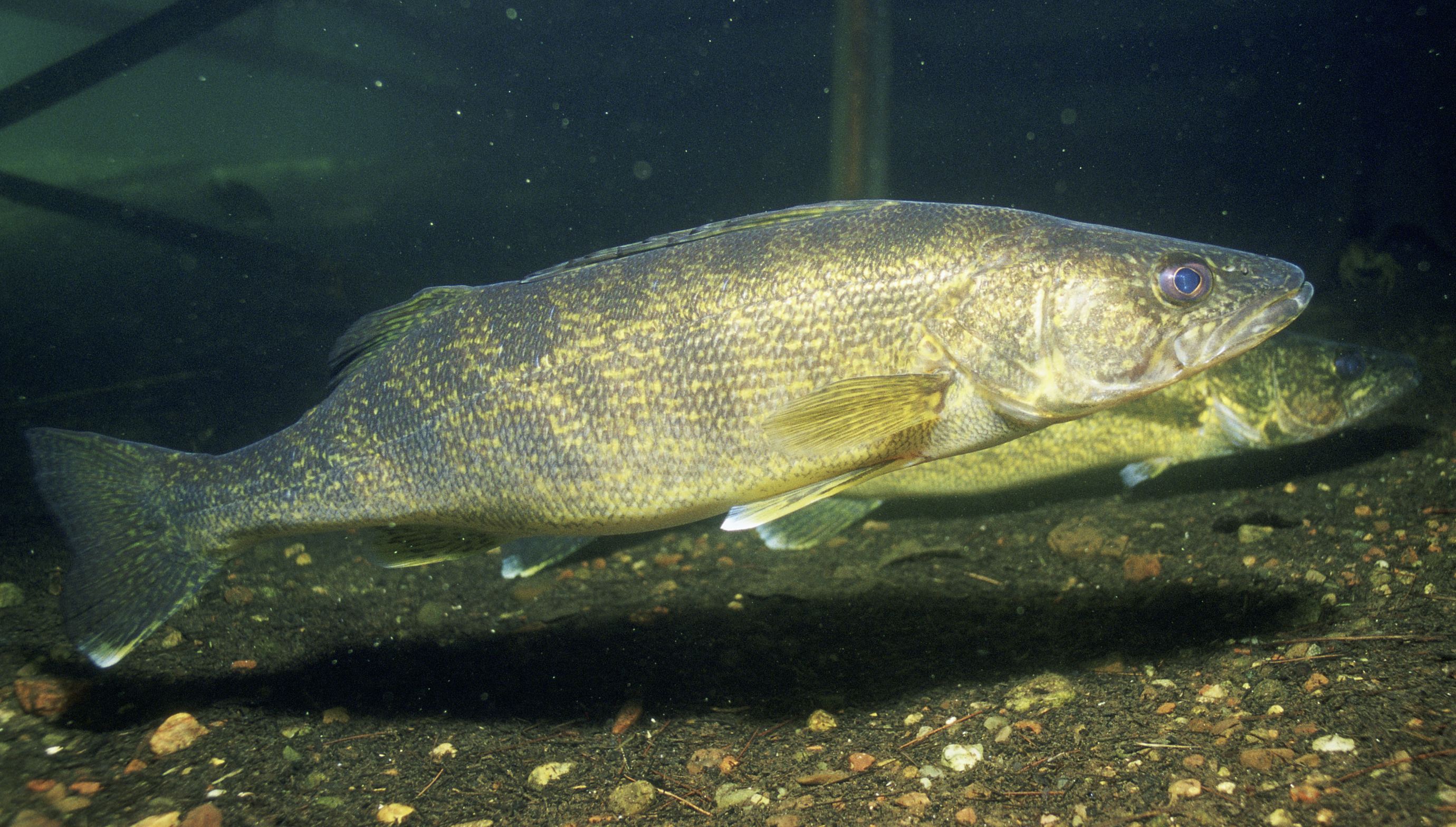
The 1/8 oz to 3/8 oz jig head with a soft plastic body accounts for an enormous proportion of walleye caught in Ontario and Manitoba each season. The combination is versatile — it covers depths from 3 to 30 feet, adapts to different bottom types, and allows natural presentation at slow retrieve speeds walleye prefer in cold water.
Northern pike respond well to large spoons (5–7 cm), inline spinners like the Mepps No. 4 and No. 5, and soft plastic swimbaits rigged on 1/2 oz jig heads. Pike have sharp teeth that sever standard monofilament leaders quickly. A 15–30 cm wire or heavy fluorocarbon leader between the main line and lure is standard. Some anglers use titanium wire leaders rated for repeated use without kinking.
Lake trout in deep Ontario and Quebec lakes are typically targeted by vertical jigging with large flutter spoons or tube jigs in 20–60 feet of water, or by trolling at speed with stick baits and spoons along thermocline depth. The strike is usually subtle — a slight change in rod resistance rather than a sharp tap.

Ice fishing equipment
Ice fishing gear is distinct from open-water tackle. Short rods (60–90 cm) are used to work lures through the hole and manage catches close to the surface. Ultralight jigging rods with sensitive spring tips detect soft bites from perch and walleye through the ice. Tip-up rigs use a flag mechanism to signal a strike while allowing the line to run with minimal resistance — suited for pike and large walleye set-lines.
Auger type — manual, electric, or propane — determines how quickly holes can be drilled. On lakes with 60+ cm of ice, electric augers with lithium batteries have largely replaced manual drilling for convenience. Propane augers are faster still but require carrying fuel.
Storing and maintaining gear between seasons
Freshwater corrosion affects reels if they are stored damp. After each season, reels benefit from a light re-grease of the main gear and line roller bearing. Braided line should be replaced annually if used heavily — the outer fibres fray and the line's effective strength decreases. Fluorocarbon leaders show memory coiling after repeated use and should be replaced when they no longer straighten under hand tension.
Rod guides develop micro-cracks in the ceramic inserts over time, which abrade line and cause unexpected breakoffs. Running a cotton swab around each guide after a long season identifies chips before they cause problems on the water.