Canada's freshwater fisheries are managed almost entirely at the provincial level, with the federal government maintaining authority only over fish that migrate between provinces or cross international borders — primarily Pacific salmon and some Atlantic species. For the vast majority of freshwater fishing — walleye in Ontario, pike in Manitoba, trout in British Columbia — the rules come from provincial governments and change on a regular basis.
That regulatory structure means an angler who fishes in multiple provinces needs to hold multiple licences and understand multiple rulebooks. It also means that what's legal in one place may not be legal across a provincial border, even on rivers that straddle both.
Licence requirements by province
Every province requires anglers to hold a valid fishing licence before casting a line in any regulated water. Licences are typically tiered by residency and age:
- Resident licences are available to people who have lived in the province for a defined period (often 6–12 months)
- Non-resident licences are priced higher and may include additional restrictions on certain species
- Senior and youth exemptions exist in most provinces, often with lower fees or free licences for specific age brackets
- Conservation licences, available in Ontario, allow fishing with lower possession limits at a reduced price
In Ontario, licences are sold by the Ministry of Natural Resources. British Columbia licences are managed through the provincial Freshwater Fishing Regulation Synopsis. Alberta, Saskatchewan, and Manitoba each maintain their own portals.
Catch limits and possession rules
Each province sets species-specific catch limits that define how many fish of a particular species you can keep in a single day and how many you can have in possession at any one time. Possession limits are typically two to three times the daily limit, accounting for fish kept in transit or at camp.
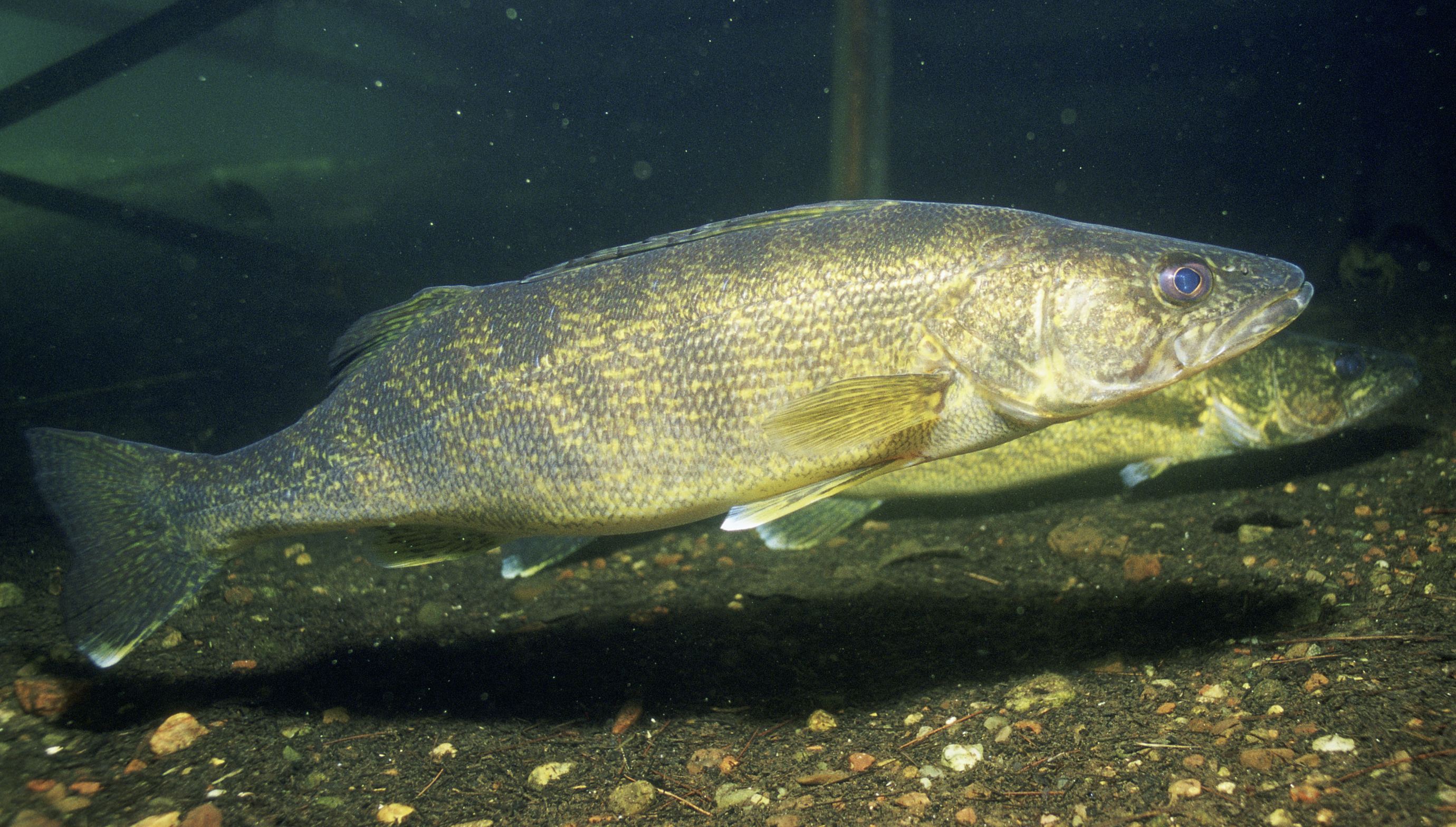
Walleye — one of the most sought-after species in Ontario and Manitoba — has some of the tightest limits in the country. In many Ontario waters, the daily limit is 4, with a possession limit of 8. In some designated waters near heavy fishing pressure, the limit drops further or special slot-size rules apply.
Northern pike regulations vary more widely. In northern Ontario, daily limits of 6 are common. In some Northwest Territories lakes, no limit exists for non-trophy fish under a certain length. The species-by-species variation means checking the specific regulation for the specific water is always necessary.
Size restrictions and slot limits
Beyond daily limits, many waters have minimum size requirements — fish below a certain length must be released regardless of how many you've kept. These are measured by total length (tip of the mouth to the tip of the tail) or sometimes fork length (mouth to the fork of the tail fin).
Slot limits add another layer: in some Ontario walleye fisheries, fish between 37 cm and 50 cm must be released, while fish outside that range (either smaller or larger) may be kept. The intent is to protect mature breeding fish in the most active spawning size range while still allowing harvest of fish above and below that range.
Lake trout regulations in Ontario frequently include minimum size limits of 40–50 cm depending on the lake, with reduced possession limits compared to other species.
Closed seasons and ice fishing rules
Most regulated species have closed seasons during spawning periods. Walleye typically spawn in Ontario from early April through late May, and fishing is closed on many lakes during this window. Bass have closed seasons in Ontario from approximately January through late June in most zones, though exact dates vary by management unit.
Ice fishing operates under the same licence and most of the same species rules as open-water fishing, with some exceptions. Tip-up limits (the number of lines that can be set simultaneously) vary by province. In Ontario, anglers may use up to four lines through the ice, subject to local restrictions.
The Ontario Fishing Regulations Summary is updated annually and is the authoritative source for that province. Always download or reference the current year's edition — regulations from prior years may differ significantly.
Federal oversight and treaty fishing rights
The federal Fisheries Act provides baseline protections for fish habitat across Canada, and the Department of Fisheries and Oceans (DFO) retains authority over species listed under the Species at Risk Act. This creates occasional overlap with provincial rules, particularly for species like lake sturgeon, which are managed jointly in some jurisdictions.
Indigenous fishing rights established through treaties and court decisions operate parallel to, and in some cases supersede, provincial recreational fishing regulations. These rights vary significantly by nation and geography and are governed by a separate legal framework.
Where to verify current rules
Regulations change between seasons and sometimes mid-season for emergency closures. The following are the primary official sources for each province:
- Ontario: ontario.ca — Fishing Regulations Summary
- British Columbia: gov.bc.ca — Freshwater Fishing
- Alberta: alberta.ca — Sport Fishing Regulations
- Manitoba: gov.mb.ca — Fisheries

