Freshwater fish in Canada don't distribute themselves evenly through a lake or maintain consistent feeding behaviour year-round. Water temperature drives almost everything — where fish hold, how actively they feed, what depth they prefer, and how they respond to different presentations. Understanding the temperature cycle in Canadian lakes across four seasons determines when and where fishing is most productive.
The cycle is more compressed in northern Canada, where ice cover lasts longer and summer is shorter, and more moderate in southern Ontario and British Columbia, where open-water seasons extend to eight or nine months. The underlying principles apply across both.
Spring: Ice-off and the pre-spawn window
Ice-off in most Ontario lakes occurs between mid-March and mid-May depending on latitude and elevation. In northern Manitoba and Saskatchewan, ice-out may not happen until early June. The weeks immediately following ice-off represent one of the most productive fishing windows of the year.
After months under ice, the water column mixes — cold surface water that has been hovering near 0°C meets the slightly warmer water below, and temperature differentiates briefly before stratification begins. During this mixing period, fish distribute throughout the water column and are found at shallower depths than at any other time of year.
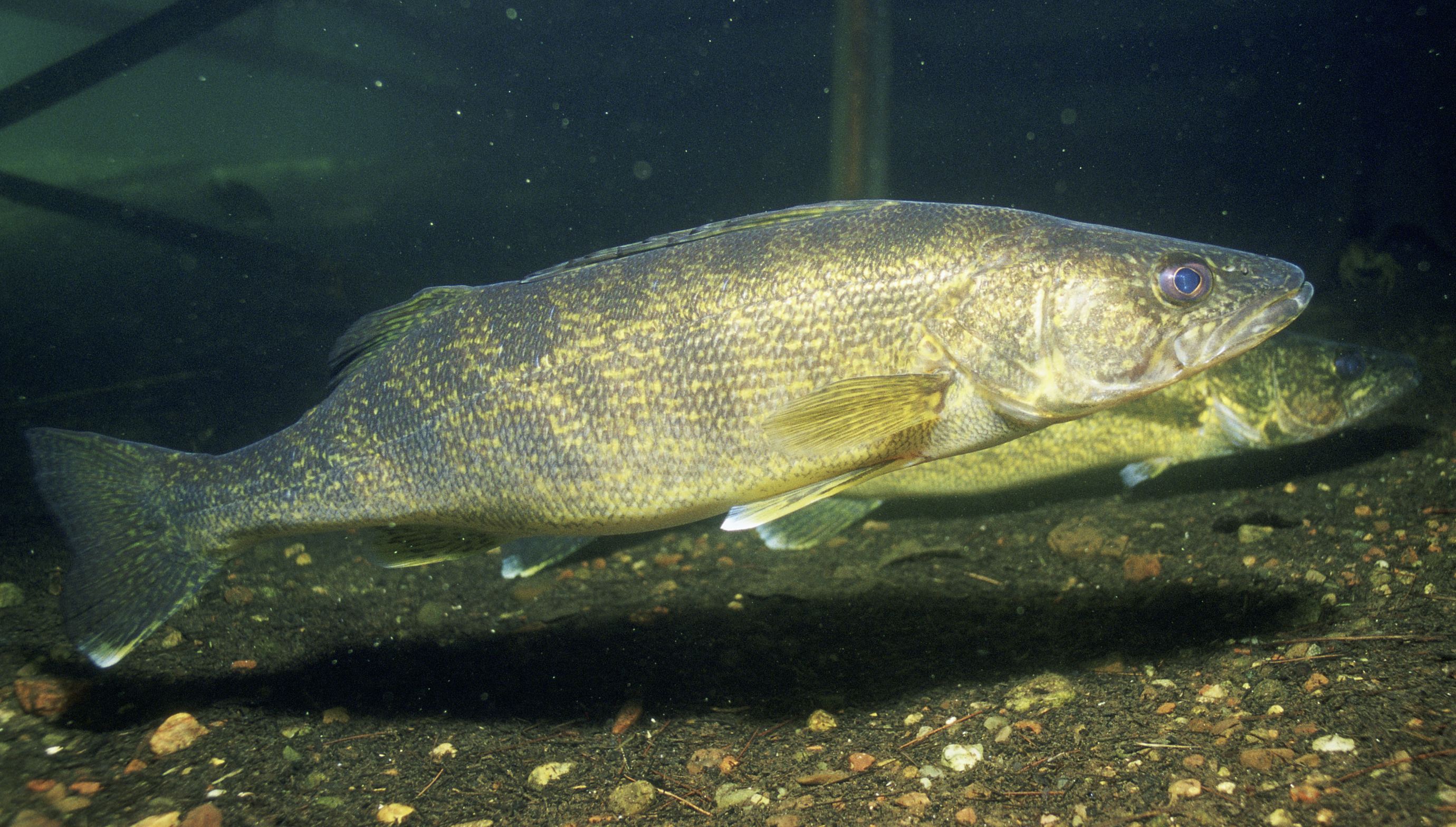
Walleye are among the first species to become active post ice-off. Water temperatures between 4°C and 10°C trigger walleye to move onto gravel bars and rocky shoals in preparation for spawning. This pre-spawn period, before fishing seasons open on many Ontario waters, is when walleye are most concentrated and most predictable in location.
Pike spawn early — often before ice-off is complete — in shallow, weedy bays where water warms fastest. Post-spawn pike move to deeper water briefly before returning to weedy shallow flats through late May and early June.
Early summer: Temperature stratification begins
As surface temperatures climb through June into the mid-teens Celsius, lakes begin thermally stratifying. A warm surface layer (epilimnion) develops above a sharp temperature break (thermocline) above cold, oxygen-depleted deep water (hypolimnion). Most active fish concentrate above or near the thermocline depth.
Bass season opens in Ontario in late June, and bass are found in relatively shallow, warm water in late June and July — typically 1–6 metres in rocky or weedy bays. Smallmouth bass favour harder bottom structure: rocky points, boulder fields, and submerged gravel humps. Largemouth bass hold near emergent vegetation, dock structures, and lily pad edges.
Walleye in summer often move deeper than in spring. On lakes with clear water and heavy fishing pressure, walleye move to thermocline depth during daylight and shallow only at dawn, dusk, and on overcast days. In turbid lakes with limited light penetration, walleye remain shallower through more of the day.

Late summer: Peak stratification and deeper patterns
Through July and August, surface temperatures on many southern Ontario lakes reach 22–26°C — too warm for cold-water species like lake trout, which require water below approximately 15°C. Lake trout in stratified lakes concentrate at or below the thermocline, often in 15–30 metres of water, and are most efficiently reached by trolling or deep jigging rather than casting.
Muskellunge activity increases through the warmer months. Muskie are ambush predators and hold near specific structural features — deep weed edges, submerged islands, the mouths of tributary streams. Locating and returning to known muskie spots consistently accounts for far more fish than covering water randomly.
Perch, a smaller species often overlooked in favour of walleye and pike, are remarkably predictable through summer. Schools of perch move over hard bottom areas — gravel flats, sand bars, rocky humps — in 4–10 metres of water. Drop shot rigs and small tube jigs produce consistent numbers through July and August when other species are less active during midday heat.
Fall: Turnover and feeding windows before freeze-up
As air temperatures drop in September and October, surface water cools. When the surface temperature matches the deep water temperature — typically around 10–12°C — stratification collapses and the lake turns over. The whole water column mixes briefly, oxygen levels equalise throughout, and fish that spent summer in specific depth ranges are suddenly free to move anywhere in the lake.
Fall turnover often produces a short period of reduced fishing quality — sometimes lasting a week or two — as fish adjust to the new thermal uniformity. After turnover completes and water continues cooling through October and November, feeding activity increases sharply. Fish need to build energy reserves before winter and ice, and the shorter days and cooling water trigger extended feeding through more of the day than in summer.
Late-fall walleye fishing in Ontario is considered by many to be the most consistent of the year. Fish are in shallower water, feeding aggressively, and the cold water (8–12°C) slows their metabolism enough that they hold on structure longer. Jigging with slow, deliberate hops along gravel or rock transitions produces reliably in this window.
Winter ice fishing: Under-ice behaviour
Under ice, water temperatures are typically 1–4°C throughout the water column. Fish are cold-blooded and their metabolism slows significantly. Feeding behaviour becomes less frequent — fish may feed only once every few days under ice, compared to daily or multiple times daily in summer.
Yellow perch remain active through ice season and are the primary target for many ice anglers. They school tightly and can be located with a fish finder, then fished vertically with small jigs tipped with live bait or wax worms.
Walleye under ice feed most actively at first and last light — the same low-light preference that defines their open-water behaviour. Setting tip-ups or jigging through the first hour after the sun drops below the horizon is consistently productive. Lake trout through ice are often targeted in the same depth range they occupied in late summer — 15–30 metres — using large tube jigs or spoons worked with long, slow hops off bottom.
Reading a lake before arrival
Ontario's lake mapping resources, including the provincial fisheries branch data and fish community reports for individual lakes, provide useful context before visiting a new lake. Lake depth (bathymetric) maps show where the thermocline will form and where structural features exist that concentrate fish in each season. Most Canadian provinces publish some version of this data through their natural resources ministry.